|
|
|
| Montana's Wild Orchids NONE of these plants will likely survive transplanting from the wild to a flower bed. Find them, photograph them, and enjoy them. But leave them in their place. Please do not collect any wild orchid. The page is image intensive and will take a while to load. Sorry, but those are the breaks... All but a couple species of Montana's orchids are now illustrated here, most with only one image. I hope to be adding some more images in the not too distant future.This page was last updated on 08 August, 2001 07:44:09 PM
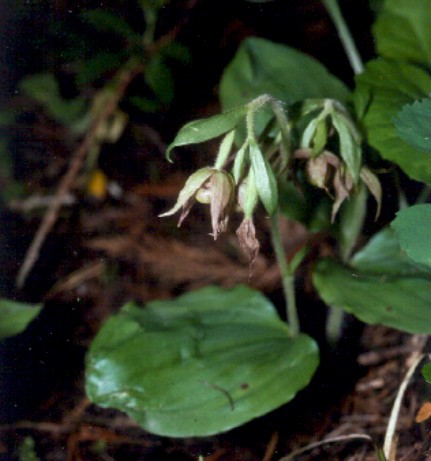
Cypripedium fasciculatum - The cluster orchid is found in scattered localities, mostly in the Northwestern part of the state.
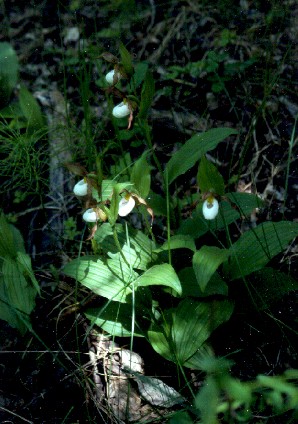
Cypripedium montanum - The large mountain orchid is reported from most of the western and central mountain ranges in the state.
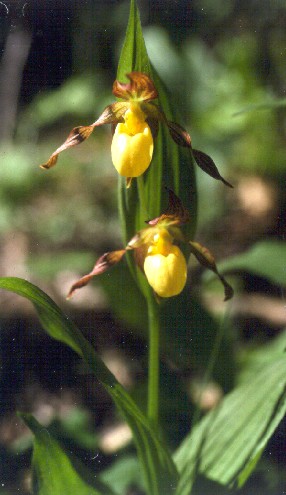
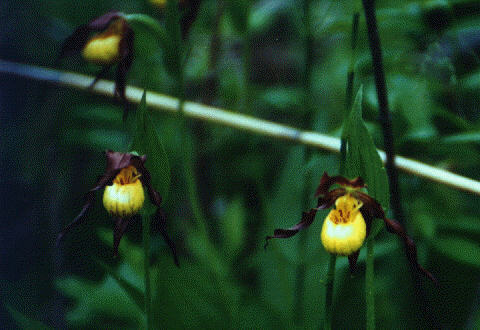
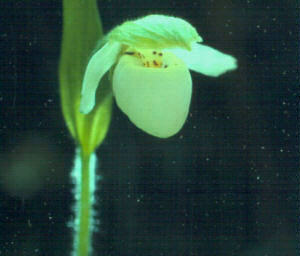
Cypripedium parviflorum - Yellow lady slipper orchids were once widespread, and reasonably common, if historical records are to be believed. Many of the appropriate habitats have been destroyed by cattle grazing and water diversion. They are still widespread throughout the state, but are generally found in small, isolated populations. The blooms of the yellow lady slippers are amongst the largest of our native wildflowers. Cephalanthera austinae - Phantom orchids are not reported from Montana, but are found in Idaho within about 30 miles of the Montana border. They may be present in the cedar forests of the Northwestern part of the state.
Amerorchis rotundifolia - This small orchid likes moist boggy or streamside locations.
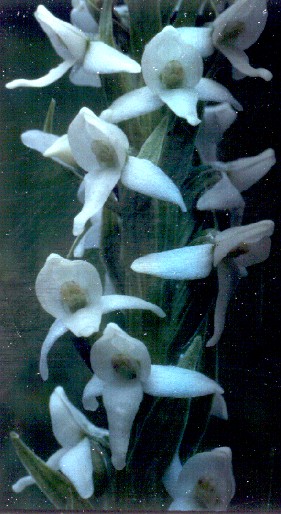
Platanthera dilatata - This is one of the most common of the orchids in the state, and may be expected in most moist roadside ditches in the mountains. If conditions are right, it is large showy plant, with a 3 foot-long flower stalk, and flowers about one third of inch wide. Under less favorable conditions, both the stalk and the flowers may be smaller.
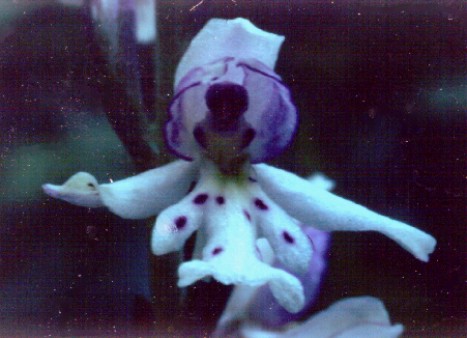
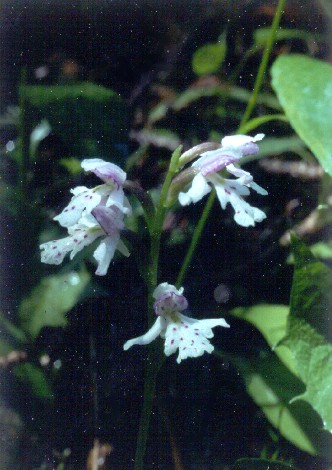
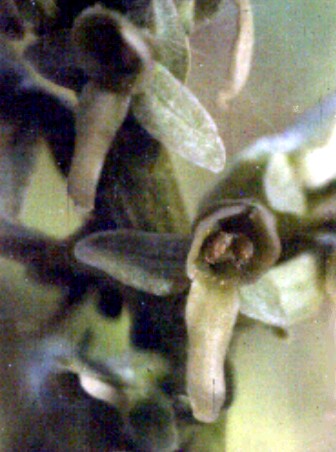
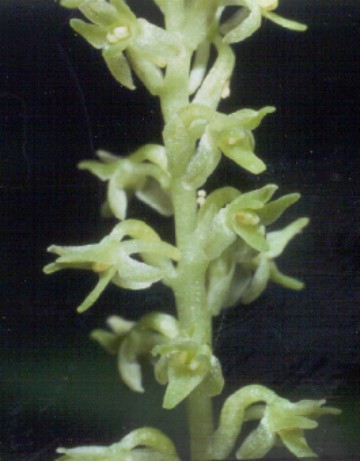
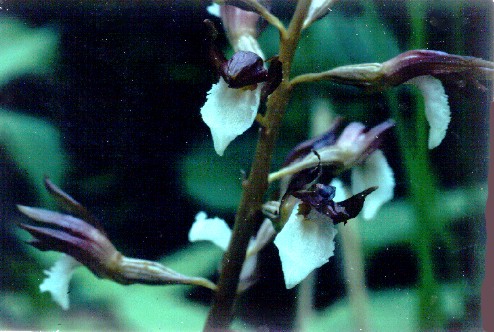
Platanthera hyperborea - This plant can almost be considered to be a green version of the preceding species and they are often found together, but in addition to color differences, there are other structural differences to the flowers.
Platanthera obtusata - This small orchid is found in wet areas in the mountains of Western Montana.
Platanthera orbiculata - This showy plant is found next to bogs, wet areas or on wet hill sides in the mountain west of Montana. The flowers are huge for such a small plant, and may be almost an inch in diameter. When seen on a shady forest hillside in early summer, they seem to shine like beacons.
Platanthera stricta - This rein orchid likes mountain bogs and blooms in early summer.
Coeloglossum viride - Known as the "bract orchid" for the large evident bracts around the flowers, this orchid may send up a flower stalk more than five feet high. The flower's lip may be about half and inch in length and is split at the tip.
Piperia elegans - The elegant rein orchid has a long nectar laden spur to entice the appropriate pollinators.
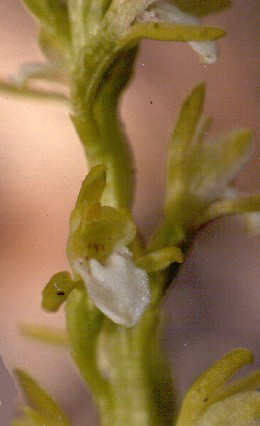
Piperia unalascensis - This small green rein orchid sends up its flower stalks on drier hill sides than you will find most of its cousins. Unlike most of the rein orchids, it is not a bog or wetland plant!
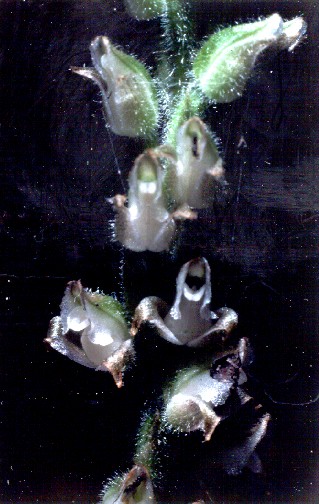
Spiranthes diluvialis - Recently found in the state, and still considered quite rare, this species may actually be quite common, and simply overlooked. It is small and appears to be an orchid that prefers disturbed areas.
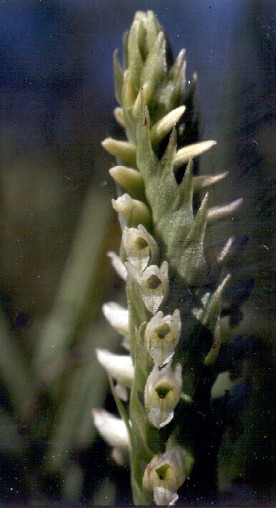
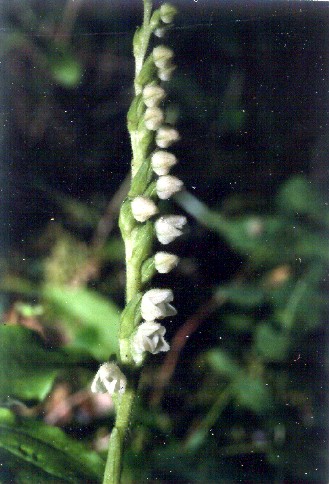
Spiranthes romanzoffiana - The ladies' tresses orchid is another of the many wetland mountain orchids in Montana.
Epipactis gigantea - This large plant is found in scattered locations throughout the Western U. S. It is typically found near or in flowing water.
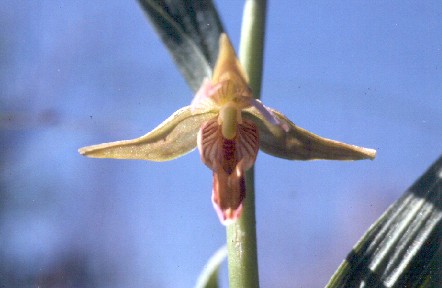
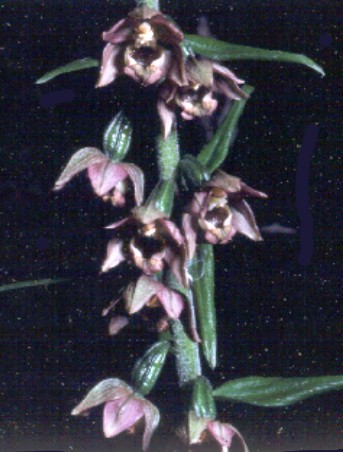
Epipactis helleborine - This is a European orchid that has escaped from garden cultivation in parts of the United States. It has been reported to be found growing wild in areas around Helena.
Goodyera oblongifolia - Rattlesnake plantain is found commonly in forests in the state. It is a late summer bloomer.
Goodyera repens - The lesser rattlesnake plantain is found in a few scattered localities in the mountains of central Montana. It appears to like areas that are moister and cooler than the preceding species.
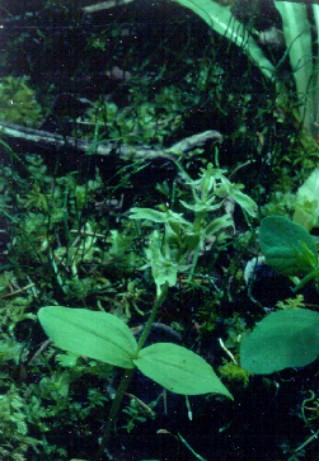
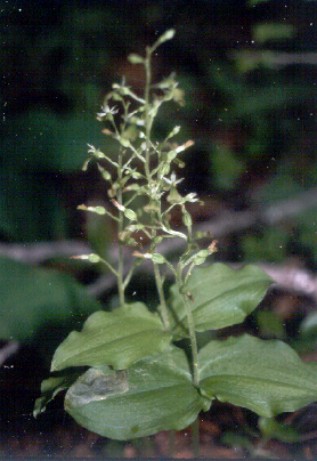
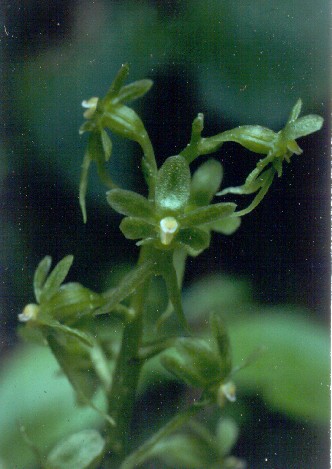
Listera borealis - The northern twayblade is really a northern Canadian species that lives in suitable habitats found in the higher elevations of the western Montana mountains.
Listera caurina - More of a Pacific Northwest species, this small orchid is found in areas of Montana that are influenced by the Pacific Maritime weather systems. Listera convallarioides - No photos of this species yet.
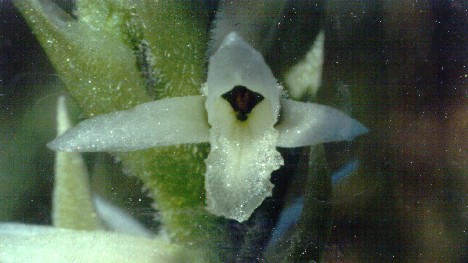
Listera cordata - This is the smallest orchid species in the state. Mature plants may be under an inch wide and the flower stalks may be only about an inch high. The individual flowers may be less than a tenth of an inch wide.
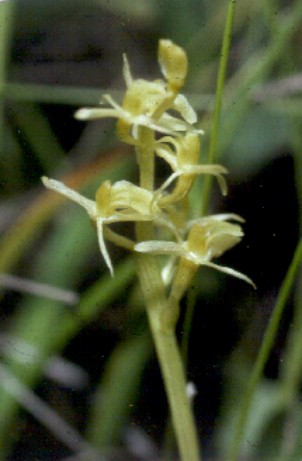
Liparis loeselii - Loesel's twayblade has only been reported from about half a dozen localities in the Swan River valley. These areas are the farthest west that this species has been recorded. It has probably the most restricted distribution and smallest population of any of the state's orchids.
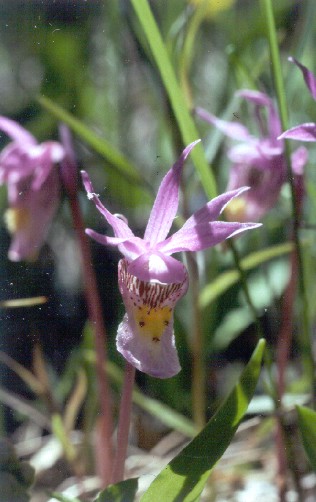
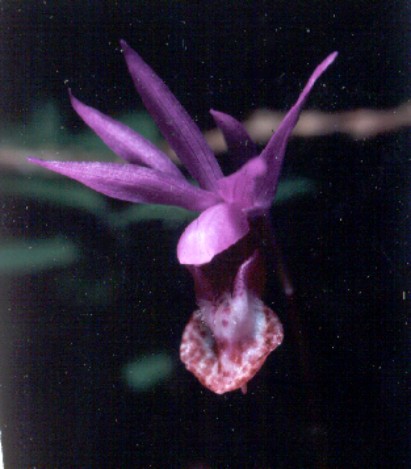
Calypso bulbosa - Fairy slipper orchids, in contrast to the preceding species, may be found almost anywhere in the mountain regions of the states. There are two varieties of this species, one with a yellow patch on the lip (shown on the left above) found in the eastern part of the state. West of the continental divide, a variety without a yellow patch is found (shown on the right above).
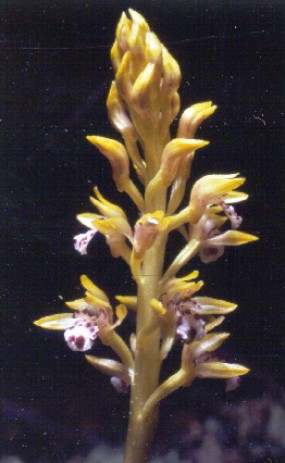
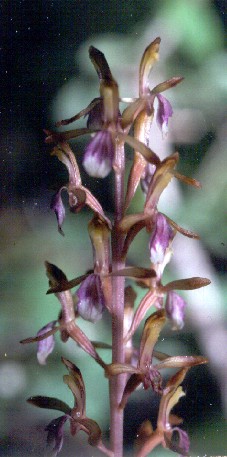
Corallorhiza maculata - Spotted coral-root orchids are found in the forested areas where they are parasitic or saprophytic on underground plant roots or debris. On occasion, one finds forms that lack the pink or red color that is normal for these plants. One of these aberrant, but beautiful plants is illustrated above.
Corallorhiza mertensiana - The western coral-root has more slender and straighter petals that the spotted coral root. The two species may be found together in the western part of the state, as the western coral-root is restricted to the Pacific drainages.
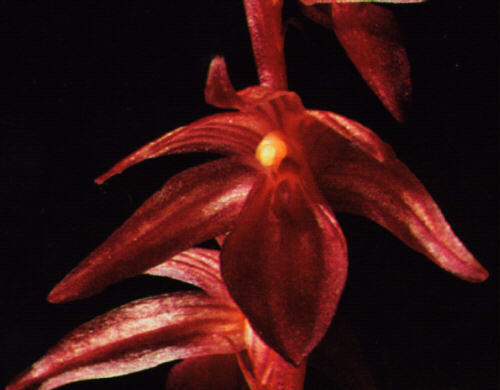
Corallorhiza striata - The striped coral root is found throughout the mountain areas of the state, and may send up flower stalks that are over two feet high. With flowers over an inch in diameter, these are the largest of the coral-root orchids in Montana.
Corallorhiza trifida - This is a "coral-less" coral-root, as it is green rather than pink and is largely photosynthetic. Often the first of Montana's orchids to bloom, this small plant may send up its flower stalks in mid-to-late May. The flower stalks are only about four or five inches long.
Corallorhiza wisteriana - At a casual glance, this species may be mistaken for a spotted coral-root, but it is smaller, the petals are held at a different angle, and the lip has a different shape. Both species, however, may have spots and live close together, so the orchid hunter has to be a bit careful in the identification of the spotted coral-roots.
This page was last updated on 08 August, 2001 07:44:09 PM
|
|
|