|
|
|
|
Unless otherwise noted, the illustrations posted here are copyright by the named source and used with permission. Reuse of these photos without the consent of the photographer constitutes a violation of the copyright and is illegal.
This page was last updated on 19 December, 2004 05:40:58 PM Most Ctenophores (pronounced "teen - o - fores") or "comb jellies" are small to moderately sized pelagic animals. Although they look superficially like jellyfish they are not at all related to them. Most forms have two long tentacles and the tentacles have branches on one side of them. Some ctenophores are sessile and look rather like flatworms. They typically are found on soft corals or gorgonians. They collect their food from the water using long extensible tentacles that use glue cells ("colloblasts") instead of nematocysts to adhere to prey. They are harmless, but they reproduce so well in some aquaria that may become abundant enough to be pests.
A small sessile ctenophore photographed in a home aquarium, photo courtesy of Ilya Brooks. Note the characteristic side branches to the tentacles. No other group of animals has tentacles that are branched like this.
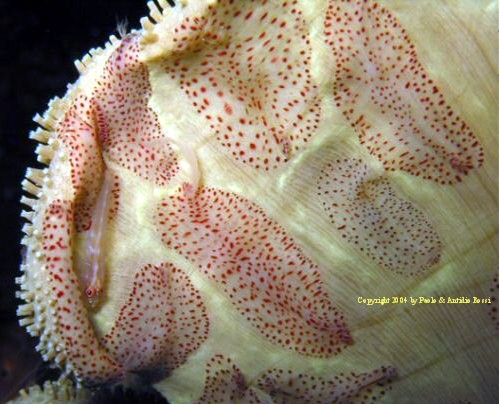
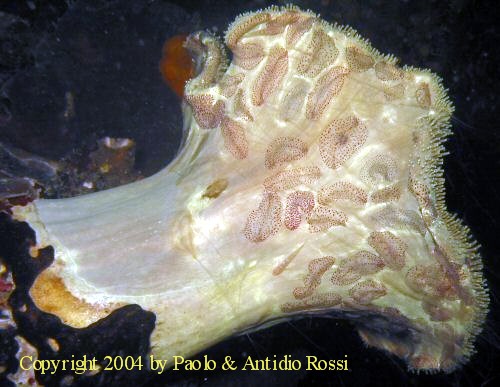
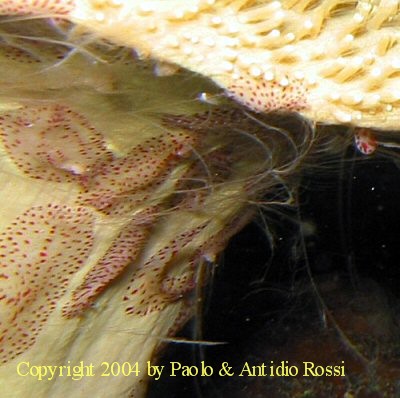
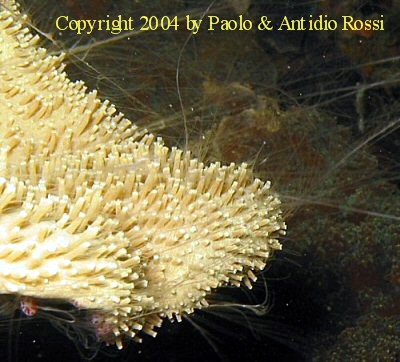
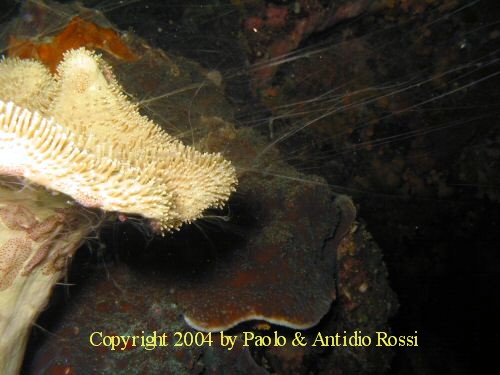
This collection of images of ctenophores, courtesy of Paolo and Antidio Rossi, shows an assemblage of ctenophores on a Sarcophyton. The two left images show the ctenophores' bodies well, the remaining images show the extended feeding tentacles.
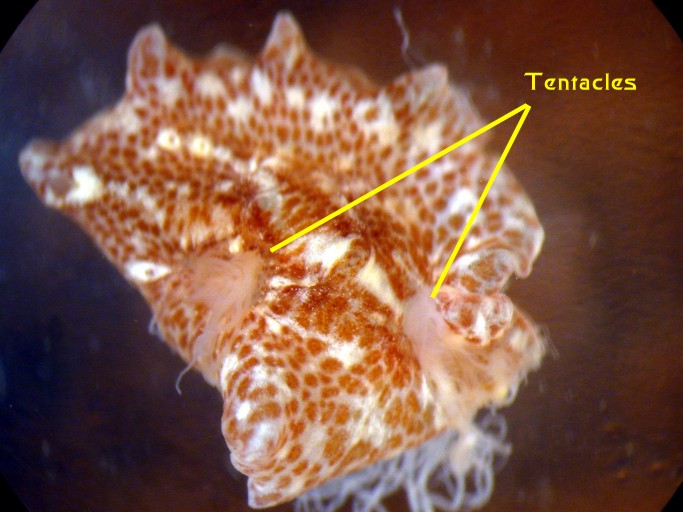
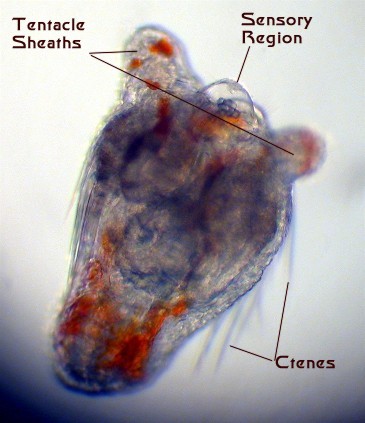
A platyctene ctenophore and larva labeled to show body parts (Images copyright Ronald L. Shimek, 2004).
|
|
|