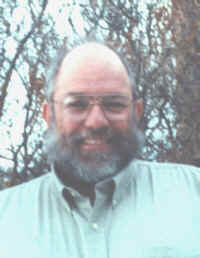
A Biography of Ron Shimek
Born: 28 March 1948, Great Falls, Montana.
I grew up in Great Falls in the EE (Eisenhower Era = "Paranoia R us"..) in a town with a major Strategic Air Command base. Learned to "duck and cover" early. In between learning the various warbles of air raid sirens, I started keeping fresh-water aquaria when I was about 12. Was fairly successful, and was soon selling Angelfish and Bettas to the local pet stores.
Got my first marine tank, a salt-water fish tank when I was 14. I wanted an anemone in with my neon gobies and a small queen angelfish, so the dealer sent me one. As I look back on it now, they sent me a large Aiptasia... and gee, I was happy to have it! That tank didn't last too long, and I went back to exclusively freshwater.
Started college in 1966 at Montana State University in Bozeman where I majored in Zoology. No tanks during this phase of life. Spent the summer of my sophomore year as a research faculty member at Georgetown Medical School in Washington, DC, and learned that I REALLY didn't want to become a member of the medical profession.
Spent the next summer at the Marine Biological Laboratory in Woods Hole, Massachusetts learning about marine ecology and invertebrate biology. Decided at this time that Invertebrates were THE animals - everything else was insignificant.
Started graduate school at the University of Washington in the autumn of 1970, and resurrected my fresh water hobby. What better way to supplement the meager grad student wages than by selling fish to the local pet stores? Specialized in wild-type green swords. Got scuba certified in early 1971.
Got married in June of 1971 to a beautiful young woman, Roxie Fredrickson, who after all these years is still a beautiful young woman and who is the joy of my life.
Started work at the UW Friday Harbor Laboratories in 1971, and started keeping marine aquaria for research animals and various pets at that time. I had marine and freshwater tanks in my research areas for the remainder of my time near the coast (until 1985). Most of these systems were open flow-through but many were closed systems. Primarily I kept mollusks, echinoderms, and cnidarians.
Graduate school came to an end in 1977, and I was awarded a Ph. D. for my efforts. Most of my work involved direct effort on the natural history, morphology, and population ecology of turrid gastropods. Did a lot of secondary work with sea anemones, sea stars, sea urchins, tunicates and some fish.
Took a position as Assistant Professor of Biology at the University of Alaska, Anchorage in 1977. Was selected as Department Chair in 1979. Left Anchorage in 1980.... Not a good place to live for us, but was able to get some more anemone and snail work done whilst there.
Went back to Friday Harbor, Washington to enter the ghetto of unemployed marine biologists (called "Independent Investigators") who were working there while submitting job applications. Found that I could wallpaper my office with the rejection letters I received (In 1977 there were 60+ invertebrate biology jobs advertised, in 1981 there were 3... lotsa competitors so jobs became tough to get). In 1981 I did some diving and a bit of informal research at Cozumel in the Caribbean.
Started doing environmental consulting during this period, and also working on other projects. Was also teaching part time where ever I could; worked up and down the coast.
In 1983, I took a 2 year contract as Assistant Director of the Bamfield Marine Station on Vancouver Island, BC, where I had taught for the preceding 2 years. Did a lot of work on scaphopod mollusks and sea anemone interactions during this period.
Also went to Palau for the first-time. Was also chief scientist for a research submersible program and got about 25 dives done in various localities surrounding the marine station.
Left Bamfield at the termination of my contract in 1985 and moved to Tucson. Bamfield gets 100+ inches of rain a year... A drying out phase was needed. Freshwater aquaria only here.
Returned to the Pacific NW in 1986 with a temporary teaching job at the Friday Harbor labs. Taught as a temporary instructor at the colleges in the Seattle area for a year or so after that. Did a research cruise and several submersible dives as a senior postdoctoral fellow at the Harbor Branch Oceanographic Institution in Florida in 1988.
In the summer of 1988 I hired on as the head of the marine biology section at an environmental consulting firm in the Seattle. Soon was into consulting "big time" - had lots of high profile and high stress jobs during most of the next four years. After a couple of years of this, I decided I didn't like being a professional biostitute for a large company, but I couldn't afford to leave.
Got my first reef tank in 1991. Became active in the (now defunct) Pacific NW Reef Club and soon became editor of their newsletter.
Went on my second diving trip to Palau in 1992. Took all sorts of environment measuring equipment along, and generally had almost no success at measuring the parameters I wanted to measure. Such is the life of research in the slow lane.
Quit the consulting firm in 1993 and set up my own company. Figured if I was going to be a biostitute - well, I wanted all the profits.
Moved back to Montana in February of 1994, and set up my reef here in the hinterlands, in the magnificent cow town of Wilsall about 90 miles north of Yellowstone Park. Am an affiliate Associate Professor of Ecology at Montana State University, and have been teaching there and at the Bamfield Marine Station off and on since 1995.
Specifics:
